
MomCare: Stories from the field
MomCare is experienced differently by everyone involved.
These stories show how the approach works in practice.
A woman's story
"A health insurance card, a delivery kit, and very good care"
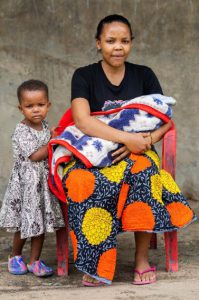
Tausaian Ramadhani lives in the Mugugu District of the Manyara Region in Tanzania. She had both of her children while in the MomCare program.
Through MomCare, she got a health insurance card, a free delivery kit, and small gifts each time she came to the clinic, such as baby diapers and a Khanga cloth after delivery. At the facility, she received very good care from the nurses and knew she could return if something felt wrong, without paying anything.
"Those who are not enrolled in MomCare face significant financial hardship and are unable to visit the hospital due to a lack of funds. This is the challenge," she says.
"I have been a beneficiary of many things as far as the project is concerned," she adds. For Tausaian, that's not a small thing. It's the difference between going to the clinic and staying home.
A provider's story
“Giving women the equipment and tests they need on time”
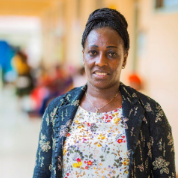
Hilda Mrema has been a nurse for 29 years and has worked at SIHA District Hospital in Tanzania for the past two decades. She describes a familiar gap in maternal care: services may be officially free, but facilities still face costs for tests, equipment, and delivery supplies. As a result, patients are often asked to bring essential items themselves.
“So, it comes to a point that we run short of tests and delivery equipment, and the mother is told to carry them with her as she comes to hospital,” she explains. In her experience, delays in accessing supplies can make childbirth riskier and harder for clinicians to manage.
“MomCare helps women get the equipment and tests they need on time, supporting safer deliveries and reducing avoidable barriers at the facility level,” she adds.
A payer's story
“We need to radically shift the way we’re doing things”
In Kenya’s Kisumu County, maternal mortality declined by about 30% over five years, from 495 to 343 deaths per 100,000 live births. Stronger community health services and more women delivering in better-equipped facilities contributed to this change.
Dr. Gregory Ganda, Kisumu County’s minister of health, reflected on the approach: “We need to radically shift the way we’re doing things.”
One shift focused on financing and quality: incentives were introduced based on the SafeCare Maternity Rating, rewarding facilities for meeting agreed standards of maternal care.
This is supported by the digital backbone being developed with partners and by BabyChecker, an AI-supported ultrasound tool designed to be used without specialist training.
Now, about 9 in every 10 women give birth in health facilities. A major change from previous years. Together, these efforts offer lessons for sustaining and deepening maternal health gains over time.