How MomCare Works
Preventing maternal deaths requires more than clinical guidelines. It requires systems that support women, providers, and payers throughout the full pregnancy journey.
MomCare brings these elements together through three connected components.
01 Financing

02 Journey tracking
03 Quality Improvement
Financing: Removing the cost barrier
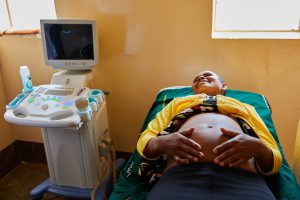
In many settings, women are asked to pay out of pocket at the point of care, even for services that are meant to be free. This leads many to delay or avoid essential care. MomCare provides women with a health wallet that covers pregnancy care from the first visit through delivery and postnatal care, including complications.
This helps women know their pregnancy care costs are covered, enables facilities to receive timely payments and creates claims data that can be used to track costs and service delivery.
Journey tracking: continuity across care
A typical pregnancy ideally consists of 11 or more visits across nine months. A woman might see different providers at different facilities. She might be high-risk but nobody flags it. She might miss a critical appointment and nobody follows up.
MomCare supports continuity by sending women appointment reminders and health information via her phone, giving providers tools to track risk levels and follow up with patients who need extra, providing remote access to care, supporting earlier identification and management of high-risk pregnancies, and enabling payers to process claims more efficiently.
Outcomes and experiences are tracked across the full journey, including women’s experience of care.
Below is our Safe Motherhood through Connected Care:
-
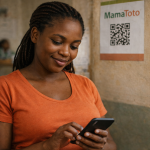
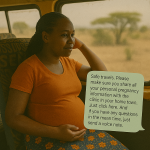
- Sign-up through WhatsApp relieves burden on the nurses and ensures privacy. The information is stored in a Shared Health Record (SHR).
-
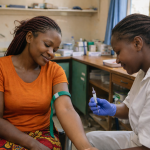
- Women on the Hybrid Care Model are 30% – 60% more likely to have at least 4 ANC visits. The SHR is used and updated at each visit.
-
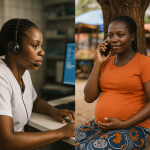
- Teleconsultations fit daily activities and save time and money compared to a clinic visit. The SHR is used and updated during each call.
-
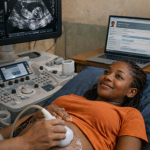
- Up to 26% of MamaToto women have mental health issues. Teleconsultations are suited to flag and treat these.
-
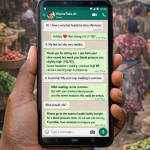
- A chatbot gives personalised advice any time, preventing misconceptions and identifying risks in a timely manner. (This bot is still under development).
-
- Most women give birth in another clinic. We make sure their medical record travels with them. (This feature is still under development).
-
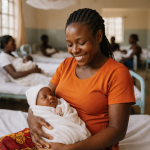
- Our combined stillbirth and newborn death rate is just 1.1%, much lower than Kenya’s average, showing safer births through better care. Statistics are from preliminary data and subject to further scientific research by Strathmore University.
-
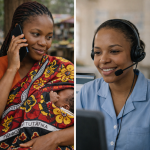
- Teleconsultations continue postpartum, adapting to the busy schedule with newborn life and ensuring that no risk is missed.
Quality improvement: turning data into better care
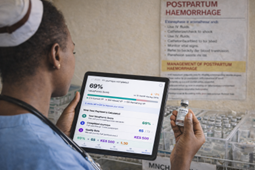
Quality of care is measured at the individual patient level using the SafeCare Maternity Rating, which measures quality of care at the individual patient level.
This information is used to support providers in improving clinical processes, link payments to quality—clinics that consistently deliver safer care earn higher payments—, and encourage continuous improvement over time.

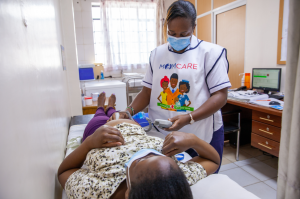
A nurse inspecting oxytocin supplies as she reviews the quality performance and incentives.
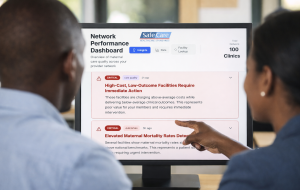
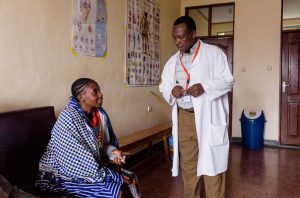
Insurance employees discussing how to take action on low-performing facilities.