This app helps people with hypertension and diabetes manage much of their care from home, reducing unnecessary consultations and travel expenses.
From 2 to 5 November, Queen Máxima visited Ghana to discuss different aspects of financial health. Ghana leads Africa when it comes to financial access: more than 80% of adults have an account and access to loans, savings and insurance. But according to a 2021 FinScope survey, only 22% are financially healthy. The Queen came to discuss the policies and services that can help Ghanaians become more financially resilient and contribute to their financial health.
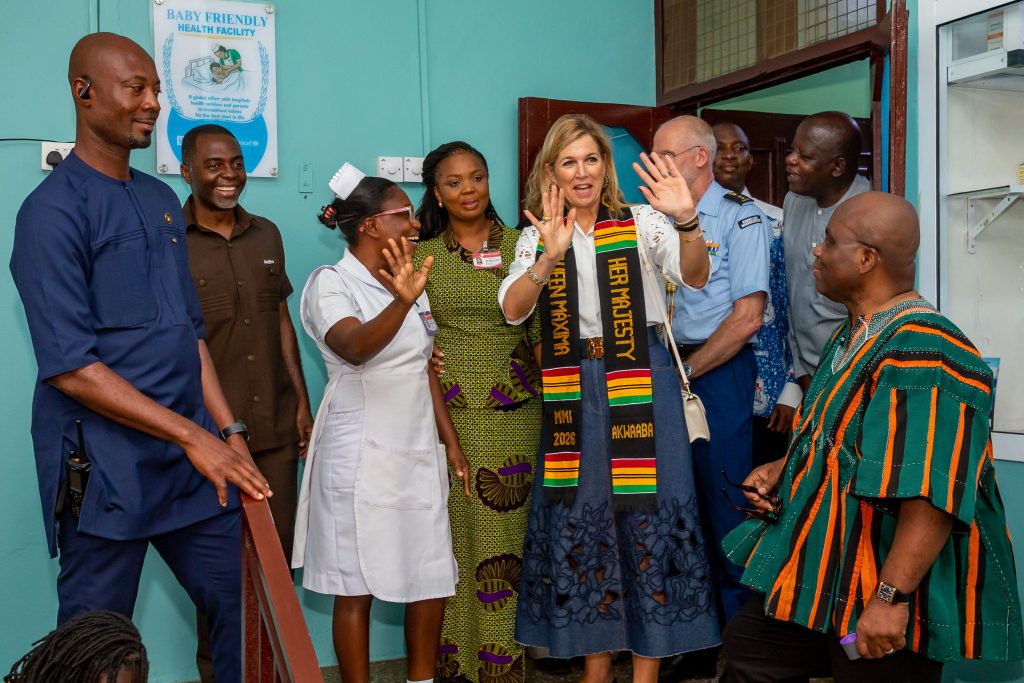
As she told journalists during the visit, “One of the biggest financial shocks people face comes from health emergencies.” On Tuesday 3 November, we had the honour of welcoming her to Manna Mission Hospital in Teshie, Accra, together with the Christian Health Association of Ghana (CHAG) and the National Health Insurance Authority (NHIA).
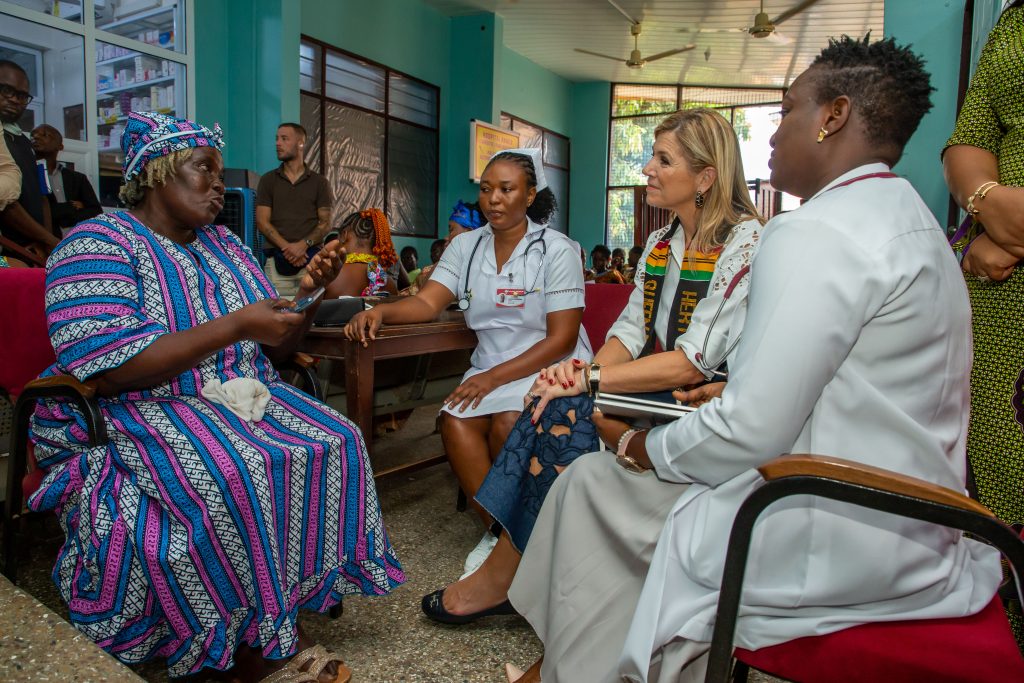
Queen Máxima came to see NkwaPlus in action. In Ghana, Nkwa stands for ‘life’. One of the patients she met was Georgina Amedome.
Fewer trips to the hospital
Georgina is 57 and has lived with high blood pressure for 18 years. She sells goods at the market, and each trip to the hospital costs her about GH¢20 (about $1.70, or around €1.50) in transport, on top of the long queues and losing her day’s sales.
“Because of NkwaPlus, I have not been coming to the hospital as often as before,” she told the Queen. She now checks her blood pressure at home and sends the readings to her doctor. If a reading is high, she’s asked to come in. If it’s normal, she carries on with her day.
Georgina goes to the market early in the morning to sell her goods, earn money for her daily expenses and take care of her children at home. “This app helps me save money and time,” she said.
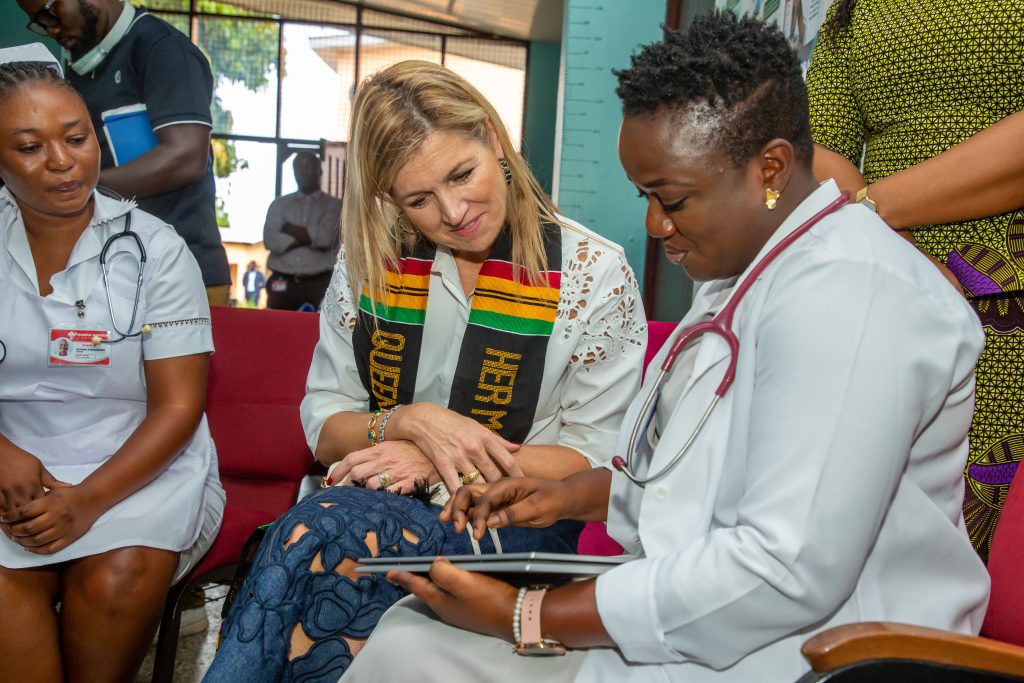
Georgina showed the Queen how the app works. Her blood pressure had been measured. As soon as she entered it in the app, NkwaPlus told her the interpretation of her blood pressure reading and that she should go to a health facility straight away. A doctor picked up the reading, called her on video, checked whether she had taken her medication that day and asked her to rest and measure again after 30 minutes.
Esther Nyadzorgbe, a nurse at Manna Mission, explained that the hospital used to see a lot of emergencies, with some patients stopping their treatment or not taking their medication regularly. “But with the NkwaPlus app, we are able to monitor them, even from the comfort of their homes or markets.”
What it saves, and who pays
The Queen asked how much remote monitoring saves patients and the hospital, pointing out that when someone arrives too late, the hospital has much more to do. One of the health workers gave the example of a stroke: treating one costs far more than monitoring, and the patient might not be able to work as before.
She also asked how much it costs to buy a home blood pressure monitor (about $20, or around €18) and whether remote monitoring is covered by Ghana’s National Health Insurance Scheme (NHIS). It isn’t yet. The app-service is still a pilot, and patients currently pay for it themselves.
From paying for visits to paying for health
Run by NHIA, Ghana’s NHIS is funded mainly through domestic taxes and levies, and now covers about 80% of the population. But chronic diseases are pushing costs up faster than the scheme’s revenues. Uncontrolled high blood pressure leads to strokes and hospital stays, which are among the main causes of catastrophic health spending for households and put pressure on NHIA’s budget.
Today, NHIA pays health facilities based on the number of services they provide. Value-Based Care aims to pay them for what those services achieve, such as a patient’s blood pressure being under control.
Together with NHIA and CHAG, we designed the model and are testing it in a pilot. Patients get in-person care at the clinic, which the NHIS covers, and remote care through NkwaPlus between visits, which it doesn’t cover yet. The aim is for NHIA to eventually pay facilities based on their patients’ results. That hasn’t started yet, because NHIA had no rates for this kind of payment when the pilot began. In the meantime, it gave facilities other reasons to focus on results: it paid their claims faster and renewed their accreditation earlier.
After 12 months, 57.1% of patients in the pilot had their blood pressure under control, up from 50% at the start. More than 90% would recommend the service.
“I think it has been a very powerful visit because we have been able to explain to her how value-based healthcare financing is helping the NHIA and healthcare providers to start paying for outcomes that matter to patients rather than just paying for output,” said Dr. Nicole Spieker, CEO of PharmAccess.
For Dr Peter Yeboah, Executive Director of CHAG, the shift is from the volume of services people use to the value they get from them.
Beyond the pilot
CHAG and NHIA plan to build on what it has learned at Manna Mission Hospital and other pilot hospitals to bring Value-Based Care to more facilities. The plan is for NHIA to develop rates for paying providers based on patients’ results for conditions such as hypertension. The partners would also like the NHIS to pay for digital care like NkwaPlus, which patients currently cover themselves.
As the Queen put it: “So these health outcomes also have a lot to do with financial health outcomes.”
About Manna Mission Hospital
Manna Mission Hospital opened in 1988 in a rented building with a single box of medicines. Today it has 48 beds and 315 staff, and 73% of its patients use health insurance. The hospital is a member of CHAG and works with SafeCare quality standards. Across three SafeCare assessments since 2020, its score has gone up from 45 to 64.